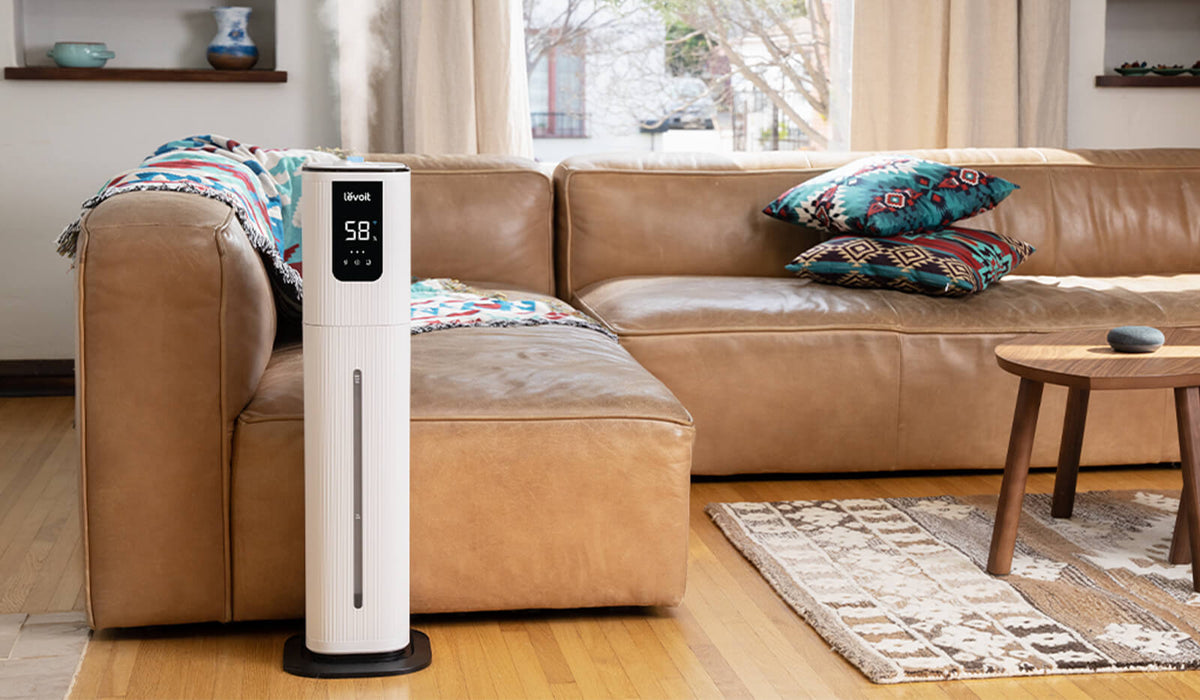
During cold winter months, relative humidity in many Canadian homes drops well below 30%, the low end of what's considered a comfortable range. Cold outdoor air simply can't hold much moisture, and once your furnace heats it up, things dry out even further.
Enter the ultrasonic humidifier: the quiet little machine that's become a go-to for Canadians trying to make it through the driest months. Here's everything you need to know about what it is, how it works, and how to get the most out of it.
What Is an Ultrasonic Humidifier?
Instead of boiling water like a steam humidifier or pushing air through a damp wick like an evaporative model, an ultrasonic humidifier uses a small metal plate that vibrates at an incredibly high frequency. Those vibrations break water into an ultra-fine mist that drifts out into the room.
No heating element, no loud fan — just a quiet mist doing its job while you stay warm under three blankets.

How Do Ultrasonic Humidifiers Work?
A small disc called a transducer vibrates at over a million times per second. That's fast enough to break water at the surface into tiny droplets without any heat at all. A gentle fan then carries that mist into the room.
It's the same basic principle used in some fog machines and essential oil diffusers, just tuned for quietly raising the humidity in your living space.
Cool Mist vs. Warm Mist
Most ultrasonic humidifiers produce cool mist, meaning the water isn't heated before it's released. Some models offer a warm mist setting as well.
Cool mist tends to be the more popular choice for Canadian homes for two reasons: it uses less energy, and there's no hot surface for curious kids or pets to bump into.

Ultrasonic vs. Evaporative Humidifiers
This is one of the most common questions when shopping for a humidifier, so here's a quick comparison:
- Ultrasonic humidifiers use vibration to create a visible mist. They're quiet, energy-efficient, and require no filter replacement in most models
- Evaporative humidifiers use a fan to blow air through a wet wick or filter, releasing invisible water vapour. They're generally a bit noisier and require periodic filter replacements
The biggest practical difference comes down to water quality. Evaporative models trap minerals in their wick, so those minerals don't reach the air. Ultrasonic models release everything in the water, minerals included, which is the source of the "white dust" question below.
Everyday Ways Canadians Are Using Them
Ultrasonic humidifiers have found a place in all kinds of rooms across Canadian homes:
- Home office: Working from home means hours in a room that dries out fast. A nearby humidifier can make the air and your desk plants a lot less parched
- Nursery: Parents often keep one running near the crib overnight since ultrasonic models operate at near-silence
- Plant care: If your fiddle leaf fig has been struggling through the winter, a little extra moisture can help it feel more at home
- Instruments: Wood instruments don't love dry air. Musicians in dry climates often keep a humidifier nearby to help protect guitars, pianos, and other gear
Are Ultrasonic Humidifiers Safe? What About White Dust?
If you've noticed a thin white powder settling on your nightstand after running an ultrasonic humidifier, that's white dust: mineral residue (mostly calcium and magnesium) from tap water that gets carried into the air along with the mist.
According to Health Canada, these particles are made of the same material that causes scale buildup in kettles and are considered harmless to most people. Using distilled water instead of tap water significantly reduces the amount released.
Health Canada is clear that ultrasonic humidifiers are safe when used as directed, but skipping regular cleaning can cause issues. The real risk isn't the technology itself — it's stagnant water left sitting in the tank. Their guidance: never leave water in the tank when the unit isn't in use and always empty the reservoir when you turn it off.
Tap Water vs. Distilled Water
It is not recommended to use tap water because it's the main reason white dust happens. If you're in a hard water area, switching to distilled or demineralized water cuts down on mineral buildup significantly. You can also purchase a demineralization cartridge as a convenient alternative.
How To Clean an Ultrasonic Humidifier
Regular cleaning matters more for ultrasonic humidifiers than almost any other type, since anything left in the tank gets released right along with the mist. Here's a simple maintenance schedule:
- Daily: Empty any standing water and wipe the tank dry before refilling
- Every 3 days: Give the tank a full clean, especially during continuous use
- Weekly (or as needed): Deep clean with a vinegar solution if you notice mineral buildup or scale
To clean with vinegar: Fill the tank with equal parts white vinegar and water, let it sit for 20 to 30 minutes, swirl gently, scrub any residue with a soft brush, then rinse thoroughly.
To clean without vinegar: Mild dish soap and warm water works well for regular cleanings. A diluted hydrogen peroxide solution handles mineral scale if you'd prefer to skip the vinegar smell.
How To Fix a Humidifier That's Not Misting
Before assuming something is wrong, check the basics: is the tank full, is it seated properly on the base, and is the transducer plate free of mineral buildup?
Mineral buildup on the transducer plate is the most common reason mist output slows down or stops. It usually clears up quickly with the vinegar soak described above.
What To Look for in a Quiet Ultrasonic Humidifier
When comparing options for a Canadian home, a few features matter more than others:
| Feature | Why It Matters |
|---|---|
| Tank size | Larger tanks mean fewer refills during long, dry winter stretches |
| Noise level | Ultrasonic models are already quiet by nature, but look for one specifically rated for bedroom use if that's where it's headed |
| Easy-to-clean design | A wide top-fill tank makes daily wipe-downs and vinegar soaks far less frustrating |
| Humidity control | A built-in humidity sensor or auto-shutoff helps you stay within a comfortable range without constant adjustments |
Make Winter Feel a Little Less Like a Desert
Dry winter air is part of the Canadian package, right along with warm beanies and frost-scraped windshields. But your living room doesn't have to feel like the Sahara because of it.
A well-maintained ultrasonic humidifier is a small, quiet addition that can make a real difference in the rooms you spend the most time in.
Browse Levoit's full lineup of humidifiers →
FAQs
Do ultrasonic humidifiers need filters?
No, unlike evaporative models that depend on a wick filter, many ultrasonic models skip filters entirely and rely on water quality to manage mineral output.
Can I put essential oils in my ultrasonic humidifier?
Yes, but depending on your humidifier. Most Levoit humidifiers can diffuse essential oils along with mist. Make sure you are putting essential oils in the designated place in the humidifier, whether in the tank, chamber, or on an aroma pad.
How long does it take for a humidifier to make a difference in a room?
Most ultrasonic humidifiers begin raising humidity levels within an hour in a properly sized room. Larger spaces or very dry conditions may take a few hours. Using the right tank size for your room makes a noticeable difference in how quickly results show up.
The information provided here is for informational and educational purposes only and should not be used in medical emergencies or for diagnosing or treating any medical condition. It's crucial to consult a licensed medical professional for diagnosis and treatment. External links are for informational purposes and do not constitute endorsements. No warranty of any kind, either expressed or implied, is made as to the products and/or the accuracy, reliability, timeliness, or correctness of the information provided herein.